



1. Cybersigilism
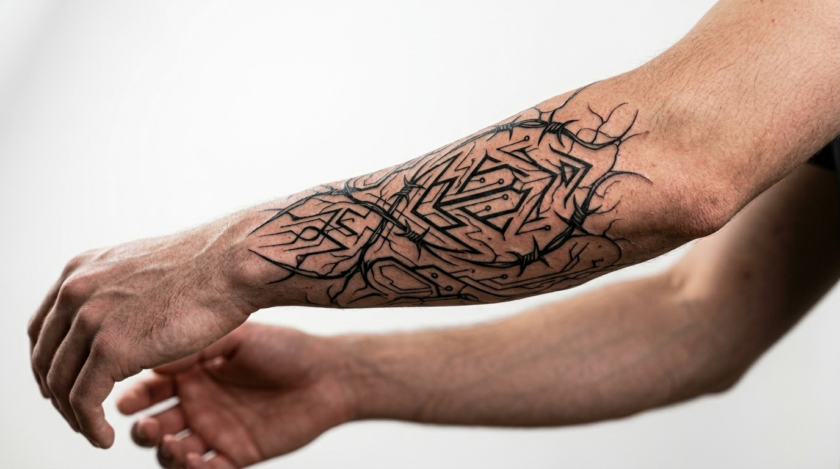
The one that started a thousand confused Google searches. Cybersigilism has been called Gen Z’s version of the tribal tattoo — minus the cultural appropriation. The style pulls from digital sigils (symbols imbued with personal intention), old-school barbed wire, and cyberpunk aesthetics to create something that looks like it was generated by a machine but drawn by hand. Thin black lines weaving into angular, almost vein-like patterns. It’s both gothic and punk, but has somehow entered the aesthetic mainstream.
The popularity of cybersigilism can be attributed to its edgy look and creative opportunity, reflecting Gen Z’s affinity for combining various cultural influences to craft something entirely new. Celebrities like Dua Lipa and Billie Eilish wearing versions of the style helped push it from niche to unavoidable.
The catch: fine, chaotic lines can blur over time, and due to their large coverage area, these tattoos are extremely difficult to cover up in the future. Think long-term before you commit.
2. Fine Line / Micro Tattoos
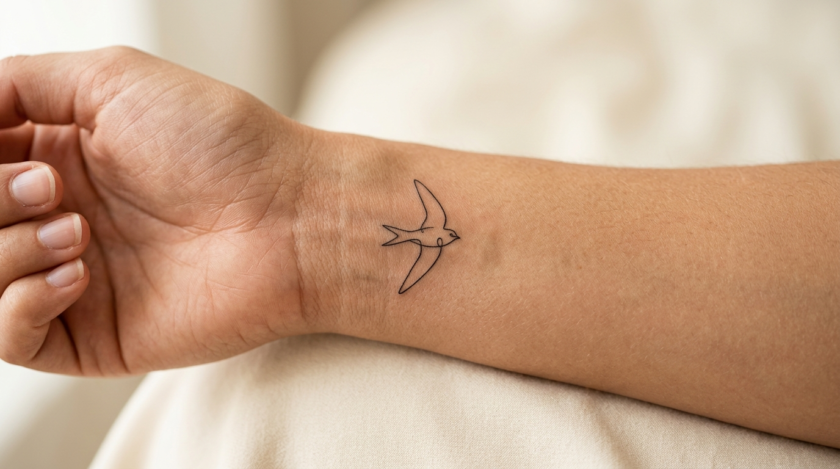
The quiet workhorse of Gen Z ink. Minimalist and micro tattoos are a cornerstone of Gen Z tattoo trends, prized for their simplicity, affordability, and versatility — tiny symbols, single-line drawings, or small script tattoos that pack a punch despite their size.
These work because they’re low-commitment without feeling meaningless. A small wave. A single word. A tiny bird on the inner wrist. They photograph well, heal fast, and slot neatly into a lifestyle where you might still want to look professional at a job interview. Popular placements include behind the ear, the inner finger, and subtle spots that can be easily hidden or shown off.
The downside is saturation — fine line tattoos are everywhere now, which is starting to make them feel less original. Execution matters more than ever. A bad fine line tattoo ages terribly.
3. Ignorant Style
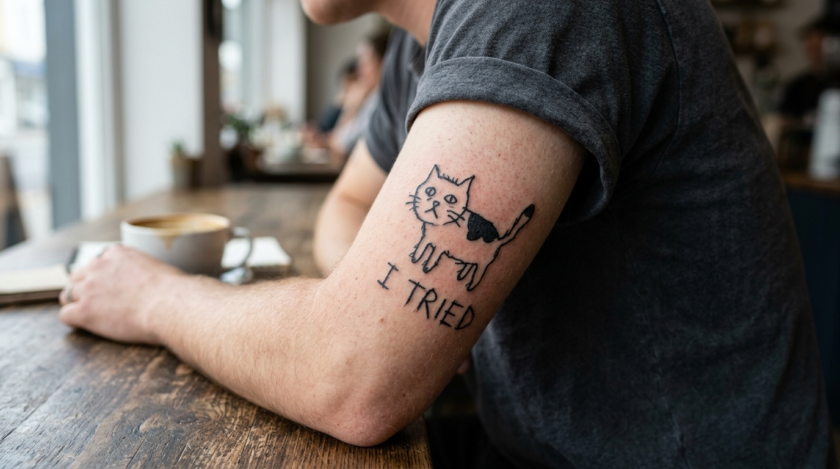
This one confuses people who expect tattoos to be technically impressive. Ignorant style tattoos look intentionally rough — wobbly outlines, flat colors, crude cartoon figures, ironic text. Think a badly drawn cat or the words “I tried” in shaky script. DIY tattoos and ignorant-style designs have become a way to reject beauty standards, with simple subjects, rough outlines that imitate unprofessional work, and bold, sometimes “acidic” colors.
The name isn’t an insult. It’s a philosophy. In a world where AI can generate technically flawless art in seconds, there’s something genuinely radical about a tattoo that looks like your friend did it in their kitchen. That’s the point. Human error as identity.
It pairs well with Gen Z’s broader anti-perfectionism streak. If the aesthetic is “I don’t care but I thought about it a lot,” this is your style.
4. Blackwork and Neo-Traditional
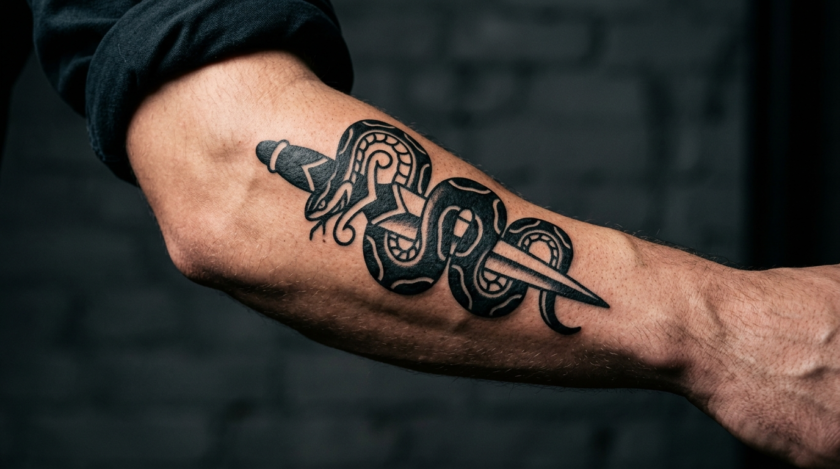
Bold black fills, thick outlines, strong graphic shapes. Blackwork is having a serious moment because it photographs well, ages well, and looks intentional even when it’s small. Neo-traditional takes classic American tattoo imagery — roses, snakes, daggers, animals — and strips away the nostalgia while keeping the structure.
Gen Z is drawn to this because it’s the opposite of precious. A blackwork tattoo doesn’t need to be protected or explained. It just sits there and looks good. It also works at every scale, from a tiny blackwork flower on a finger to a full sleeve.
5. Watercolor and Brushstroke Tattoos
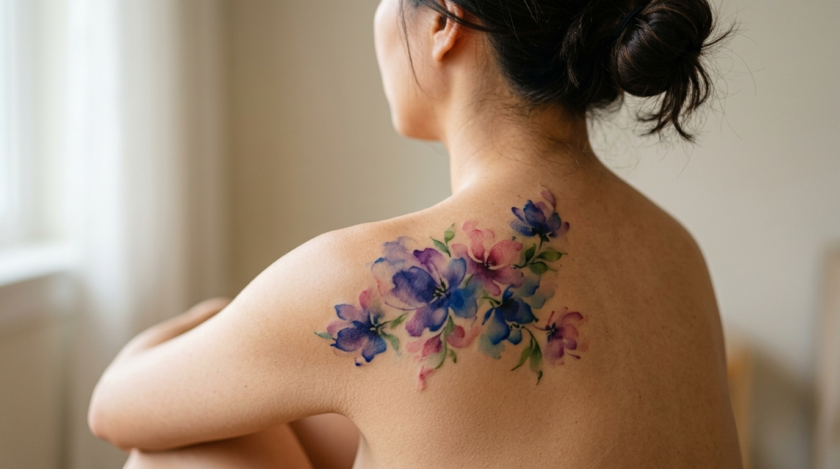
Less dominant than a few years ago but still very much alive. Watercolor tattoos mimic the look of watercolor paintings, featuring vibrant colors and soft edges, appealing to those who want their body art to reflect a vibrant, artistic personality. Common designs include abstract florals, splashy animals, and color washes behind a central image.
The honest caveat: watercolor tattoos fade faster than black-ink work, especially without a bold outline to anchor the color. If you’re considering one, research artists who specifically specialize in this technique — the difference between a good and mediocre watercolor tattoo is enormous.
6. Semantic / Text Tattoos
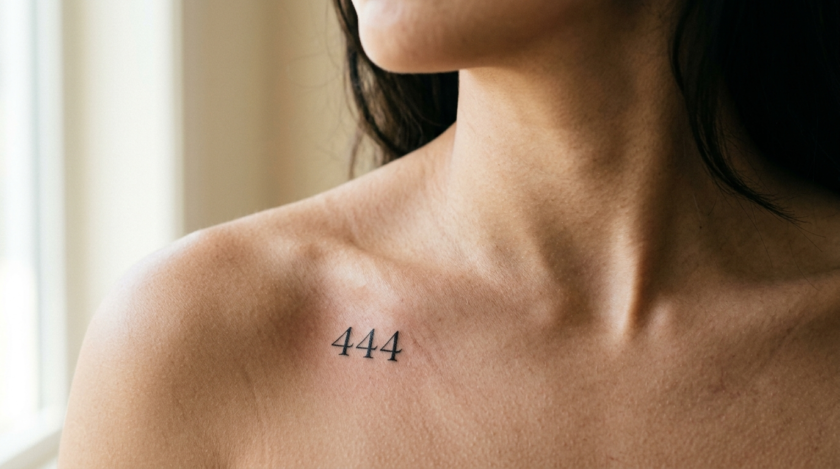
Words and phrases — but not the inspirational-quote style of early 2010s Tumblr. Gen Z text tattoos are drier. More specific. A single obscure lyric, a word in a language you actually speak, a timestamp, a number that means nothing to anyone else. The goal is personal resonance, not universality.
Angel numbers (111, 222, 444) have their own micro-genre here, popular among Gen Z’s spiritually adjacent crowd who aren’t religious but aren’t not spiritual either. Small, repeating numerical sequences placed on the wrist or collarbone. Angel numbers and fine-line script are among the most consistent designs artists report seeing from Gen Z clients.
7. Nature and Botanical Motifs (Executed Finely)
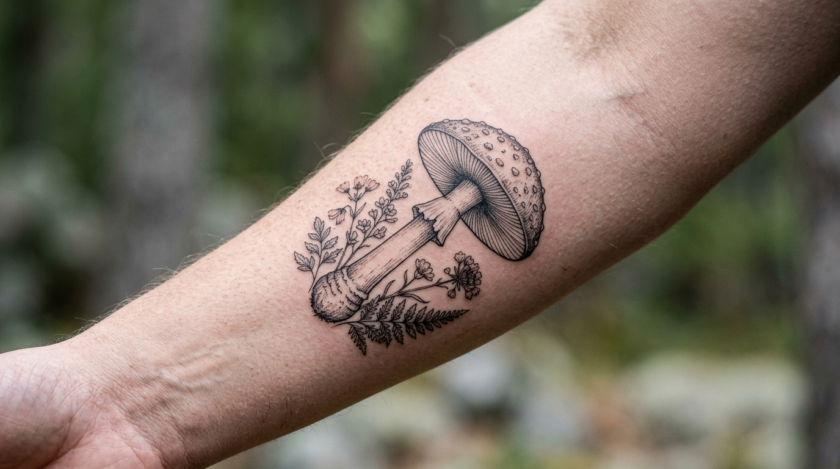
This isn’t your millennial watercolor hummingbird. Gen Z’s botanical tattoos are precise — single-needle illustrations, pressed flower aesthetics, antique botanical diagram vibes. In major cities, fine floristry tattoos have become the choice for those who value minimalism and elegance, creating the effect of a pencil sketch or antique illustration.
Mushrooms are having a particular moment, which tracks with Gen Z’s broader obsession with cottagecore and foraging culture. Insects — moths, beetles, bees — are close behind.
8. Matching / Friendship Tattoos
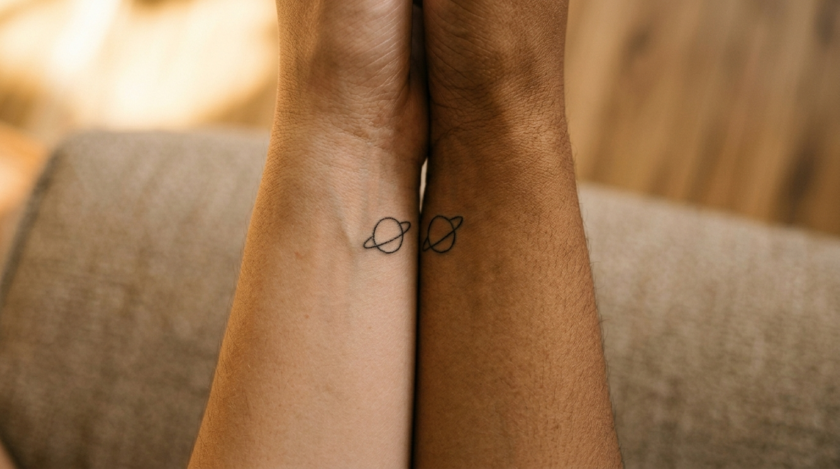
Getting inked with someone else is not new. What’s new is how Gen Z does it. Less “best friends forever” cursive, more a shared weird symbol only the two of you understand. A matching doodle. The same obscure emoji. A line from a text conversation.
Matching tattoos are particularly popular with Gen Z, frequently driven by TikTok trends that go viral and inspire pairs or groups to visit studios together. The shared-experience angle matters more than the design itself. It’s about the story behind it, not the visual.
9. Mental Health Symbolism
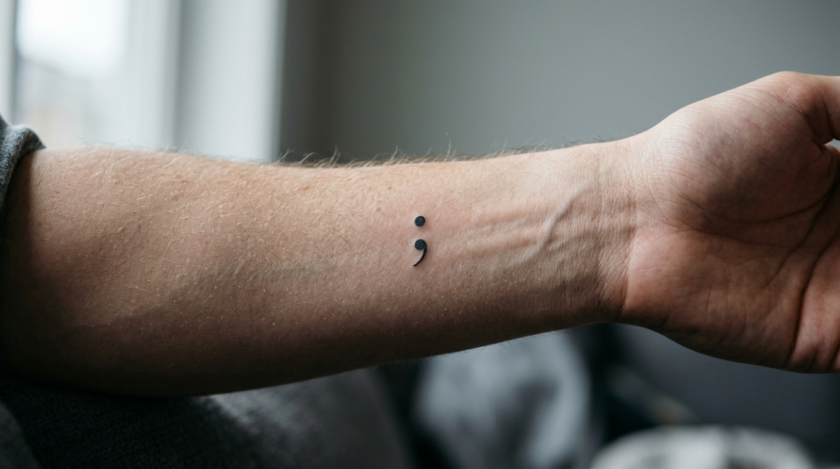
The semicolon tattoo started with millennials but Gen Z has expanded the language significantly. Designs like tiny semicolons for mental health awareness have become meaningful staples in Gen Z’s tattoo vocabulary, joined now by a broader range of personal symbols — sobriety dates, recovery milestones, self-affirmation words.
These tattoos function more like private reminders than public statements. Placed where the wearer can see them — inner wrist, forearm — rather than somewhere for an audience. That specificity is what separates them from trend-chasing. They mean something real to the person wearing them.
10. Retro and Nostalgia-Core
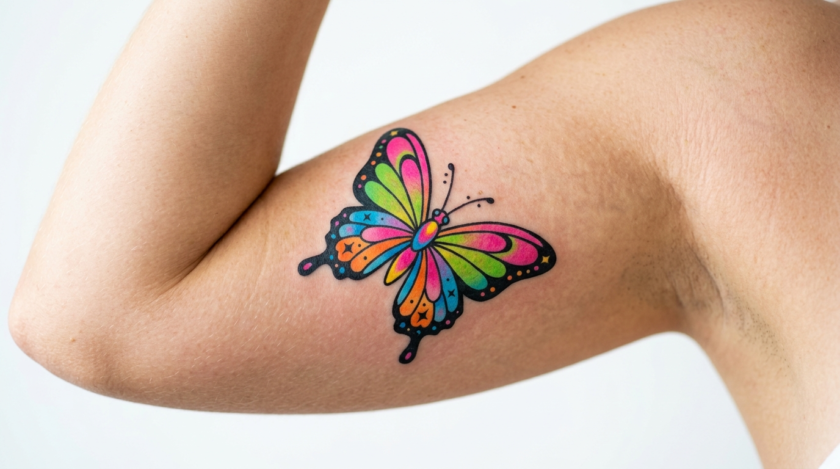
Y2K is back. So are tattoos that look like they belong there. Lisa Frank colors. Butterfly clips. Cartoon characters from childhood. Chunky fonts that feel lifted from an early-2000s AIM screen name. Gen Z is reclaiming the aesthetic of their earliest memories and putting it permanently on their bodies.
This trend leans playful in a way most Gen Z tattoos don’t. It’s unserious on purpose. A Bratz doll. A Tamagotchi. A rainbow rendered in solid, candy-bright fills. The vibe is: I remember exactly when I was happy, and I want that on me.
What does a Gen Z tattoo say about you?
More than aesthetics — it signals values. Gen Z tattoos tend to be anti-conformist even when they’re trendy, which sounds like a contradiction but isn’t. The difference is why someone gets a popular style: because an algorithm told them to, or because it actually connects to something real in their life.
The most citable observation here: Gen Z is the first generation to tattoo against permanence. They choose small designs, less visible placements, and styles that can coexist with other tattoos because they know they’ll keep adding. It’s not one definitive statement — it’s an evolving collection. A visual diary, not a monument.
That’s a fundamental break from how tattooing worked for every generation before them.
Are tattoos still popular with Gen Z in 2026?
Yes — though there’s a real conversation happening about whether the peak is behind us. The Pew Research Center found that as of 2023, 32% of Americans have at least one tattoo, with tattoo prevalence especially high among millennials. Gen Z is on track to rival or surpass that number, but there are signs of a slowdown: artists in some markets are reporting a post-pandemic dip in bookings, and tattoo removal has been on the rise alongside a so-called “tattoo recession” in certain places.
Some of the pullback is economic — tattoos got expensive. A quality micro tattoo from a reputable artist can easily run $200–$400, and Gen Z’s financial reality doesn’t always leave room for that. Some of it is generational backlash: one viral theory holds that Gen Z may be the last heavily tattooed generation, with Gen Alpha likely to associate tattoos with their parents and grandparents rather than rebellion.
Whether that’s true or not, tattoo culture isn’t going anywhere. It’s just shifting — like it always has.
How to pick a Gen Z tattoo that you won’t regret
- Sit on the idea for at least three months before booking. If you still want it, that’s your answer.
- Research the specific artist, not just the style — technique matters more than aesthetics for long-term results.
- Think about placement relative to your lifestyle: hands and fingers fade fast, ribs are painful but heal cleanly.
- Avoid anything that’s currently going viral. By the time you’re booked, it’s already peaking.
- If the design is meaningful, the trend doesn’t matter. If the design is just trendy, treat it like a haircut — it will look dated eventually.
- Ask your artist what they think will age well. They’ve seen more regrets than you have.
The defining truth about Gen Z tattoos is this: they’re not asking for your approval. Every other generation tattooed with some awareness of how it would be received — by employers, parents, strangers. Gen Z genuinely doesn’t seem to care, which is either the most radical thing about them or just the natural end point of tattoos being completely normalized. Between 2012 and 2019, the percentage of Americans with at least one tattoo jumped from 21% to 30% — and Gen Z grew up in a world where that normalization was already complete. For them, a tattoo isn’t a statement about society. It’s just a statement about themselves.
That might be the most Gen Z thing of all.
Comments are closed.