



Headlines scream about Gen Z’s “shocking conservative shift.” Think pieces warn that young people are abandoning progressive values. Social media is full of claims that Gen Z—especially young men—are becoming the most conservative generation in decades.
But is any of this actually true?
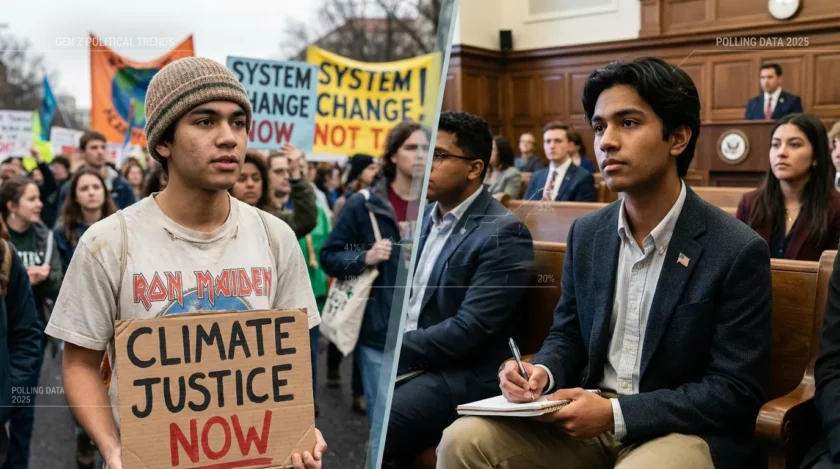
The answer is more complicated than viral headlines suggest. Yes, some data shows movement among certain groups within Gen Z. But no, Gen Z as a whole is not suddenly conservative. The reality involves massive gender gaps, temporary political swings, and a lot of confusion about what “conservative” even means.
In this guide, I’ll break down what the actual data shows about Gen Z’s political views. You’ll see the real numbers, understand the gender divide, and learn why this narrative exists in the first place. No speculation—just facts backed by credible research.
Defining the Question: What Does “Conservative” Mean?
Before we look at data, we need to be clear about what we’re measuring. “Conservative” can mean different things.
Social conservatism involves traditional values about gender roles, family structure, LGBTQ+ rights, and cultural issues.
Economic conservatism focuses on free markets, limited government, lower taxes, and reduced social spending.
Political party identification is different from ideology. Someone can hold conservative views but not identify as Republican.
This matters because Gen Z might lean one way economically and another way socially. Conflating these creates confusion. Most of the “Gen Z is conservative” narrative focuses on social conservatism and voting patterns, not economic policy.
What the Overall Data Actually Shows
Let’s start with the big picture. Multiple credible research organizations track Gen Z’s political ideology.
PRRI Data: Gen Z Remains Liberal Overall

According to PRRI’s 2023-2024 research, 36% of Gen Z adults identify as liberal, 34% as moderate, and 27% as conservative. This makes Gen Z adults notably more liberal than older generations.
Gen Z adults are notably less likely than Gen X (36%), Baby Boomers (40%), and the Silent Generation (46%) to identify as conservative. By contrast, Gen Z adults are the most likely of any generation to identify as liberal, at 43% when you look at the broader data.
This doesn’t sound like a conservative generation. But there’s a catch.
The Teen vs. Adult Split
Gen Z teens are far more likely than Gen Z adults to lean toward the political center, with 44% identifying as moderate. And Gen Z teens and Gen Z adults are equally likely to identify as conservative (30% for both), but teens are notably less likely to identify as liberal (24%) than Gen Z adults.
So older Gen Z leans liberal. Younger Gen Z leans moderate. This creates confusion when people talk about “Gen Z” as one group.
Party Identification
Recent PRRI data finds that Gen Z adults remain more likely to identify as Democrats (36%) than Republicans (21%) or independents (30%).
Even among Gen Z men specifically, just 24% identify as Republican, and Gen Z men are more likely to identify themselves as liberal than conservative (38% versus 31%, respectively).
This data directly contradicts the “Gen Z is going conservative” narrative. But it’s not the whole story.
The Massive Gender Gap
Here’s where things get interesting. Gen Z isn’t moving right as a generation. Gen Z men and Gen Z women are moving in opposite directions—creating the largest gender gap in recorded polling history.
The Political Divide

Data from Gallup shows that in the U.S., women aged 18 to 30 are now 30 percentage points more liberal than their male counterparts. This gender gap in ideology is five times wider than in 2000, and wider than at any previous point in polling history.
A slight majority of Gen Z women (52%) say they consider themselves to be Democrats—the largest concentration of any age and gender group within one political party. Meanwhile, 38% of Gen Z men identify as Republican, compared to 20% of Gen Z women.
This is unprecedented. No previous generation has shown this level of political division between men and women.
Views on Gender Equality
The divide goes deeper than politics. Six in 10 (60%) Gen Z men agree men are being expected to do too much to support equality, 22 points higher than the four in 10 (38%) Gen Z women who feel the same. This is the largest generational gender divide on this question.
Around six in 10 (57%) Gen Z men also say we have gone so far in promoting women’s equality that we are discriminating against men, compared with around a third (36%) of Gen Z women who hold this opinion.
Over a quarter (28%) of Gen Z men say a man who stays home to look after his children is less of a man—nine points higher than the share of Gen Z women (19%) who say the same.
These gaps don’t exist in older generations to this degree. This is a Gen Z-specific phenomenon.
International Patterns
This isn’t just an American trend. The 2024 elections showed young men played a key role in the rise of populist parties across multiple countries.
In the February 2025 German federal election, around a quarter of 18-24 year old men voted for far-right party, AfD. In the 2024 UK general election, 12.9% of young men voted for Reform UK, compared to 5.9% of women.
76% of people in South Korea say there is tension between men and women in the country—the highest of 30 countries surveyed on this question. The United States ranks high as well, with 58% saying tension exists between men and women.
The 2024 Election: Temporary or Permanent Shift?
The 2024 U.S. presidential election triggered most of the “Gen Z is conservative” headlines. But the data requires context.
What Happened
Overall, Gen Z voter turnout declined in 2024, with voter participation among the youngest group dropping to 47% from 50% in 2020.
A post-election survey found that 58 percent of Gen Z men (voters age 18 to 27), reported voting for Donald Trump—not since the election of George H.W. Bush 36 years ago has a majority of young men voters backed a Republican for president.
Meanwhile, Gen Z women, more than men, tended to support progressive candidates, influenced by concerns about issues like reproductive rights, climate change, and Fourth-wave feminism.
Why It Happened
Multiple factors contributed to Gen Z men’s shift toward Trump:
Explanations for Trump’s gains with young men include the economy, appealing to them through podcasters like Joe Rogan, “speaking to” their mental health struggles, less outreach from liberals, and men feeling “left behind” amid progress for women.
Many young people felt shut out of opportunities their parents had, such as buying a home or building stable careers. Economic anxiety drove votes.
Was It Temporary?
Here’s the crucial part: Some post-election surveys of Gen Z voters have found their rightward shift in the 2024 election may have been temporary.
AtlasIntel’s February polling shows President Trump’s approval rating among 18–29-year-olds has climbed to 52.7 percent in February, suggesting the shift might be solidifying. But other data shows younger voters remain fluid in their political commitments.
The jury is still out on whether 2024 represents a lasting realignment or a one-time protest vote.
Economic Views: A Different Picture
When it comes to economic policy, Gen Z doesn’t look particularly conservative at all.
Support for Government Action
According to a 2018 survey by Pew Research Center, 70% of Generation Z want the government to play a more active role in solving their problems.
54% of people between the ages of 18 and 29 wanted larger government compared to 43% who preferred smaller government and fewer services.
When it comes to economic issues, Gen Zers are primarily concerned with inflation/cost of living (69%) and affordable housing (64%). And Gen Z is more attuned to issues of income inequality and employment opportunities (56%) than older generations.
Top Priorities
Regarding social and environmental issues, Gen Z’s foremost concern is healthcare access and affordability (72%), closely followed by climate change initiatives (64%).
These priorities align more with progressive economic policies than conservative ones. Gen Z wants government solutions to big problems—not limited government and free markets.
Why the “Gen Z Is Conservative” Narrative Exists
If the data shows Gen Z overall leans liberal, why does everyone think they’re going conservative?
Media amplification
Shocking headlines get clicks. “Gen Z men shift right” is more interesting than “Gen Z women become most progressive group ever.” The nuance gets lost.
One youth vote leader noted that social media has undoubtedly “amplified extremes” complicating Gen Z’s collective social and political ideologies.
Focusing on teens, not adults
Gen Z teens are twice as likely to identify as more conservative than their parents than millennials were 20 years ago. This makes headlines. But these are teenagers whose views may change dramatically once they’re older.
Youth vote experts stressed that this ideological shift doesn’t necessarily correlate with a shift in party identification—and may not last beyond Gen Z teens’ high school years.
The gender gap creates confusion
When Gen Z men move right and Gen Z women move left, the average looks moderate. But that average hides a massive internal divide.
More than any other generation, caution needs to be applied when making generalisations about Gen Z as a whole.
Comparing to Millennials, not older generations
Gen Z might be slightly less liberal than Millennials on some measures. But they’re still far more liberal than Gen X, Boomers, or the Silent Generation.
The comparison matters. Gen Z isn’t conservative—they’re just not quite as progressive as the most progressive generation (Millennials) on every single issue.
What About Social Issues?
On cultural and social issues, Gen Z’s views are mixed—but still generally progressive.
Abortion
Following the overturning of Roe v. Wade in 2022, 65% of men and 71% of women aged 18 to 29 in America supported legal abortion in “most or all cases”.
That’s strong pro-choice support. However, in the 2024 presidential election, only 43% of Gen Z men said that abortion was their top concern, showing it matters less to young men than young women.
LGBTQ+ Rights and Diversity
74% of Gen Z said efforts or programs that promote diversity, equity and inclusion (DEI) are helpful to the country, a number that is higher than for any other generation.
In a 2018 Pew Research Center survey, 62% of Gen Z saw increased ethnic or racial diversity as good for society and 53% supported interracial marriage.
These are not conservative positions. Gen Z broadly supports progressive social values—though with the massive gender caveat we’ve discussed.
The Bottom Line
So, is Gen Z more conservative? The answer depends on who you’re talking about and what you’re measuring.
Gen Z as a whole: Still more liberal than any generation except Millennials. Supports government action on healthcare, climate change, and economic inequality. Backs progressive social policies on LGBTQ+ rights and diversity.
Gen Z men: Moving right on some measures, especially around gender issues and cultural conservatism. Split more evenly between parties than previous generations of young men. More likely to feel that equality efforts have gone too far.
Gen Z women: The most progressive demographic group in American history. Strongly Democratic, strongly liberal, and driving left on nearly every measure.
Gen Z teens: More moderate and less ideologically defined than Gen Z adults. Their views may solidify or shift as they age.
The “Gen Z is conservative” narrative is oversimplified and largely wrong. What’s actually happening is a historic split between Gen Z men and women—creating a generation that looks like two different generations politically.
The 2024 election showed Gen Z men are persuadable by conservative messaging, especially around economic anxiety and cultural backlash. But that doesn’t make the entire generation conservative.
Understanding Gen Z’s politics requires looking past viral headlines and examining the actual data. The picture is messy, divided, and still evolving. But one thing is clear: blanket statements about Gen Z being conservative ignore the complexity of what’s really happening.
Want to understand Gen Z politics? Stop treating them as one group. The gender gap is the story. Gen Z men and Gen Z women are living in different political realities—and that divide will shape American politics for decades.