



If you’ve noticed that Gen Z depression seems… different when it comes to mental health, you’re not imagining it.
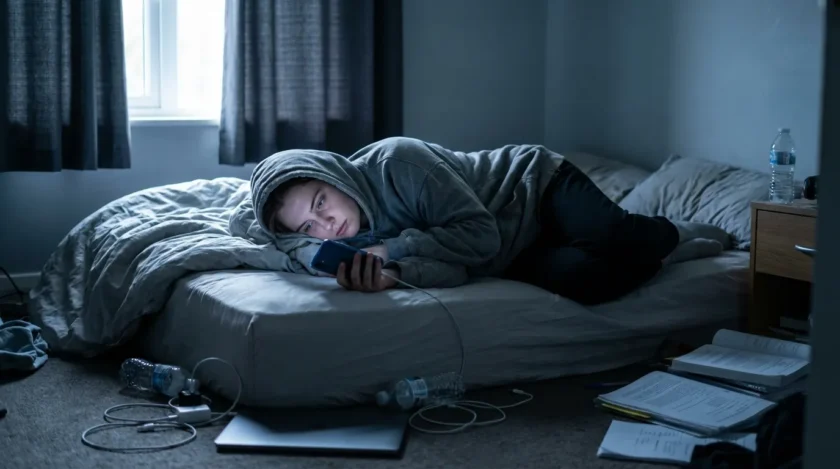
This generation reports depression and anxiety at rates that would have been unthinkable 20 years ago. Nearly half have already been diagnosed with a mental health condition. And the numbers keep climbing.
But here’s the twist: while Gen Z is struggling more than any generation before them, they’re also doing something revolutionary about it. This article breaks down the real statistics, explains what’s actually happening, and reveals why there might be more hope than you think.
The Numbers Don’t Lie (And They’re Shocking)
Let’s start with the hard facts.
Nearly half (46%) of Gen Z Americans have been diagnosed with a mental health condition, most often anxiety, depression, or ADHD Harmonyhit. That’s almost one out of every two people born between 1997 and 2012.
And it gets more specific. When asked about the impact on daily life, over half of Gen Z (53%) report changing sleep patterns tied to their mental health, while 49% struggle to concentrate and 45% skip social events Harmonyhit.
But wait—there’s an even bigger number. In California, 94% of Gen Z youth report experiencing mental health challenges in an average month Blueshieldca. That’s basically everyone.
For context, 46% of Gen Zs reported feeling stressed or anxious most or all of the time, compared to 41% of Millennials PubMed Central. Gen Z edges out even Millennials, who were already considered the “anxious generation.”
Why Gen Z? What Happened?
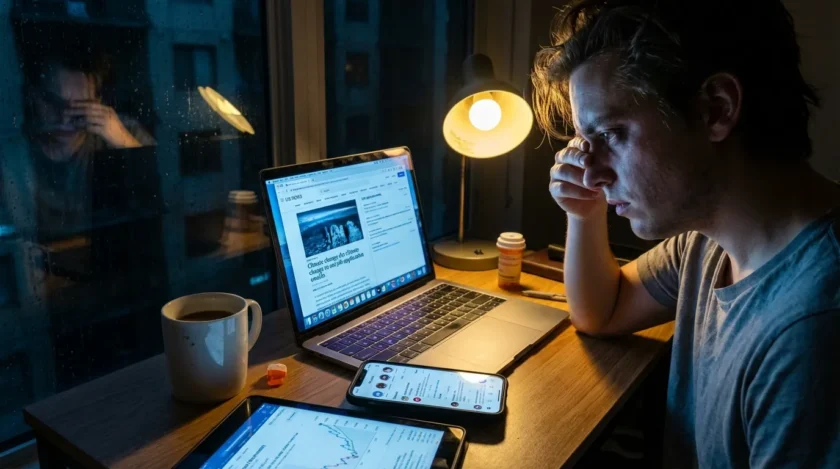
So what the hell happened? Why is this generation so much more depressed than the ones before them?
The Pandemic Stole Critical Years
Let’s start with the obvious one.
Gen Z spent their formative years—middle school, high school, early college—locked in their bedrooms during a global pandemic. The improvement in happiness could be largely due to therapy, with over 2 in 5 (42%) of Gen Z reporting going to therapy, which is a 22% increase from 2022 Harmonyhit.
The youngest Gen Zers were in elementary school during COVID. The oldest were just starting their careers. Either way, they missed out on crucial face-to-face social development at exactly the wrong time.
One expert noted that the pandemic didn’t just pause life—it fundamentally changed how this generation relates to the world.
Social Media Is a Double-Edged Sword
Here’s where it gets complicated.
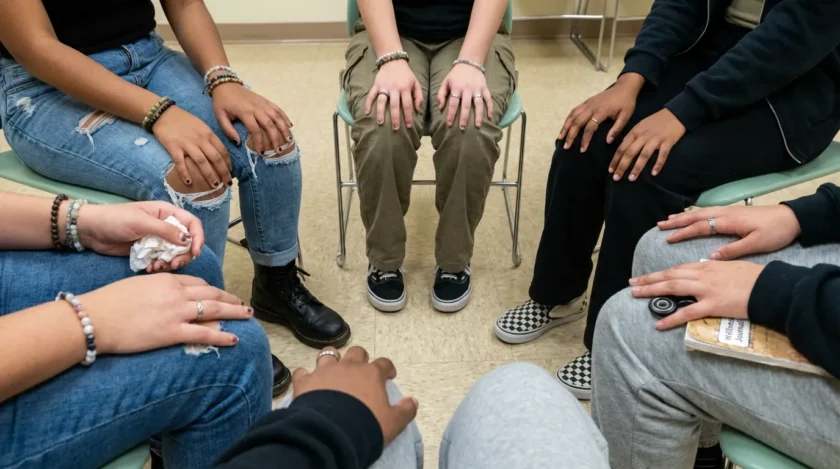
60% of Gen Z report feeling overwhelmed by news and events happening in their community, their country, and the world at large UNICEF. They’re consuming news more than any other type of content, and it’s crushing them.
Think about it. Every day, Gen Z wakes up to school shootings, climate disasters, political chaos, wars, and economic collapse—all delivered directly to their phones in high-definition video.
Nearly 7 in 10 (68%) have taken a social media break for their mental health Harmonyhit. They know it’s a problem. But they also can’t fully escape it.
Social media isn’t just showing them the news. It’s showing them everyone else’s highlight reel while they’re sitting in their room feeling like garbage.
The Economy Is Crushing Them
Let’s talk money.
87% of Gen Z expressed concerns about housing affordability, 84% about the cost of groceries, and 73% about finding a good job Blueshieldca. These aren’t abstract worries. These are daily stressors about basic survival.
Gen Z graduated (or is graduating) into an economy where:
- Rent costs half their paycheck
- Student debt is crippling
- Entry-level jobs require 5 years of experience
- Buying a house feels like a fantasy
Three out of every 10 members of Gen Z have given up on buying a home altogether due to cost CNBC.
When you can’t afford to move out of your parents’ house at 25, it’s hard to feel optimistic about the future.
Climate Anxiety Is Very Real
This one hits different.
Of the 78% who say they are concerned about climate change, nearly all respondents (99%) concerned about climate change say they’ve taken at least one pro-climate action in the past year Blueshieldca.
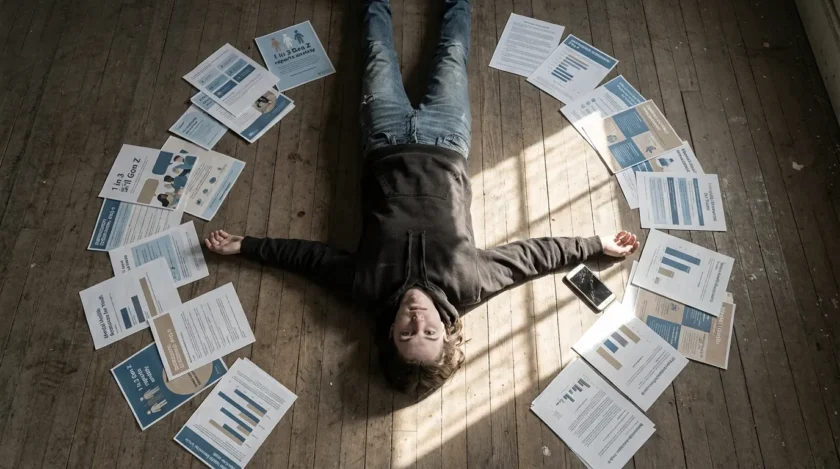
Gen Z is living with the knowledge that the planet might be uninhabitable by the time they’re old. And they’re not being dramatic—scientists are saying the same thing.
Unlike older generations who could pretend climate change wasn’t real, Gen Z is watching it happen in real-time. Wildfires. Floods. Record heat. It’s not theoretical anymore.
Gun Violence and Safety Fears
85% cited gun violence as a major stressor Blueshieldca.
Gen Z grew up with active shooter drills. They practiced hiding in closets and learned which textbooks would stop a bullet. This is normal for them.
Millennials had fire drills. Gen Z has “someone might murder you at school today” drills.
Let that sink in.
Discrimination and Social Issues
78% reported concerns about racism, 67% said discrimination against LGBTQ+ people is a stressor, while concern about discrimination against immigrants ranked even higher at 81% Blueshieldca.
Gen Z is the most diverse generation in history. They’re also the most aware of systemic inequality. They see it, experience it, and carry the weight of trying to fix problems they didn’t create.
The Comparison Game: Gen Z vs Other Generations
Here’s what makes Gen Z unique.
While Generation Z has been called the most depressed generation, members of this group are more likely than their older peers to seek out mental health counseling or therapy. Some 39% of Gen Zers — a higher rate than any previous generation — report working with a mental health professional The Annie E. Casey Foundation.
Previous generations suffered too. But they suffered in silence.
Boomers were told to “tough it out.” Gen X was labeled the “slacker generation” for showing any emotion. Millennials started the conversation about mental health, but Gen Z is living it out loud.
The difference? Gen Z refuses to pretend everything is fine.
The Access Problem (It’s Not Just About Awareness)
Here’s the frustrating part.
60% of Gen Z youth ages 12 to 17 with major depression do not receive treatment The Annie E. Casey Foundation. Even though they know they need help, they can’t get it.
Why not?
Only half know where to find resources to support their mental health, and just 55% believe they have effective coping mechanisms UNICEF.
There’s also the money problem. Therapy is expensive. Insurance coverage is spotty. Among those who took time off work for mental health reasons, 49% of Millennials and 47% of Gen Zs gave their employers a different reason for their absence PubMed Central.
Translation: they can’t even be honest about why they’re struggling because of workplace stigma.
But Wait—There’s Actually Good News
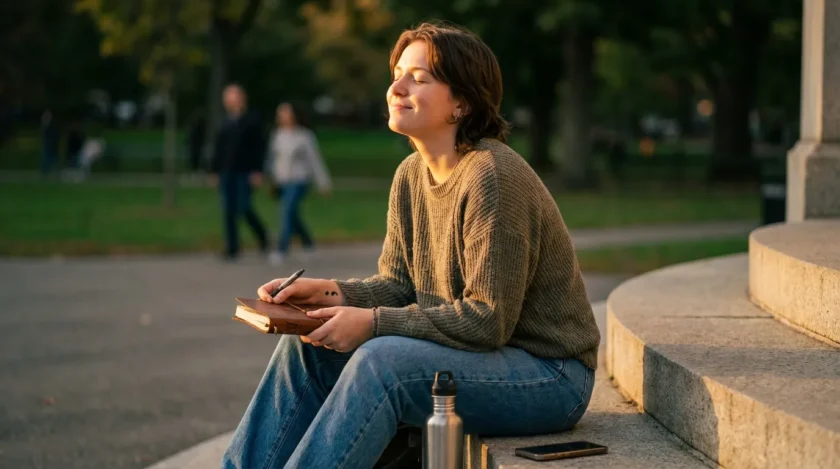
Before you spiral into doom, here’s the plot twist.
Over half (54%) report having mostly good mental health days – a 21% increase since 2022. Additionally, only 10% report having mostly bad mental health days – a 21% decrease from 2022 Harmonyhit.
Gen Z mental health is actually improving.
Why? Because they’re taking action.
42% of Gen Z reports going to therapy, which is a 22% increase from 2022. Additionally, 77% report doing self-help, which includes books, journaling, and podcasts Harmonyhit.
They’re not just complaining. They’re actively working on their mental health in ways previous generations never did.
What Actually Helps
Activities rooted in movement, mindfulness, and social connection, such as walking, playing, or spending time with friends and family, are considered the most effective for supporting mental health UNICEF.
Gen Z is also trying:
- Therapy (both in-person and online)
- Medication (34% currently taking prescription meds for mental health)
- Self-help resources
- Social media breaks
- Exercise and outdoor time
- Creative outlets like music and hobbies
California youth turn to creative outlets and self-care strategies like listening to music and entertainment (77%), hobbies (62%), exercise (55%) and time outdoors (41%) to manage stress and stay grounded Blueshieldca.
They’re figuring it out, one TikTok therapy tip at a time.
They’re Still Hopeful (Seriously)
Here’s the most surprising stat of all.
Despite these pressures, 60% remain hopeful and want to contribute to shaping a better future UNICEF. And 63% said they feel hopeful for the future Blueshieldca.
Think about that. A generation facing climate disaster, economic collapse, and unprecedented mental health challenges is STILL optimistic.
95% of youth ages 10 to 24 believe there are people in their lives who really care about them, 76% feel a sense of belonging with a group such as their friends or school, and 83% express that they are optimistic about their future The Jed Foundation.
That’s not fragility. That’s resilience.
What Can Actually Be Done?
Gen Z isn’t asking for pity. They’re asking for change.
Gen Z demands collective action, and they want to be in the driver’s seat. They recognize that addressing mental health challenges requires collaboration across generation, sectors and institutions – and they want to be at the head of this table Youthmentalhealthcoalition.
Specifically, they want:
- Schools to provide mental health resources (74% say schools should play a role)
- Employers to support mental health (60% say employers should help)
- Accessible, affordable therapy
- Reduced stigma so they can be honest about their struggles
- Action on climate change, gun violence, and economic inequality
Public-school staffing ratios remain grim: fewer than half of districts meet the recommended one counselor per 250 students MGMT Digital. That needs to change.
The Bottom Line
So why is Gen Z so depressed?
Because they inherited a broken world, lived through a pandemic during their most formative years, doomscroll climate disasters on their phones, can’t afford rent, and practice hiding from school shooters.
The better question is: how are they not ALL depressed?
But here’s what makes this generation different. They’re not suffering in silence. They’re talking about it, seeking therapy, taking breaks from social media, and demanding systemic change.
Gen Z reported the following methods as the most helpful for their mental health: therapy, self-help resources, medication, exercise, social connection, and creative outlets Harmonyhit.
Yes, Gen Z is struggling. But they’re also fighting back in ways no generation has before. They’re rewriting the rules on mental health, refusing to accept “that’s just how it is,” and slowly but surely, making progress.
The crisis is real. But so is the hope. And honestly? That might be the most Gen Z thing about them.
If you’re struggling: You’re not alone, and there are resources available. The 988 Suicide and Crisis Lifeline is available 24/7 by call or text.